Biological Physics of DNA, Chromosomes and Nuclei Colloquium & Lecture Series

Asia/Taipei
1F Auditorium (Institute of Physics, Academia Sinica)

1F Auditorium

Institute of Physics, Academia Sinica

Description
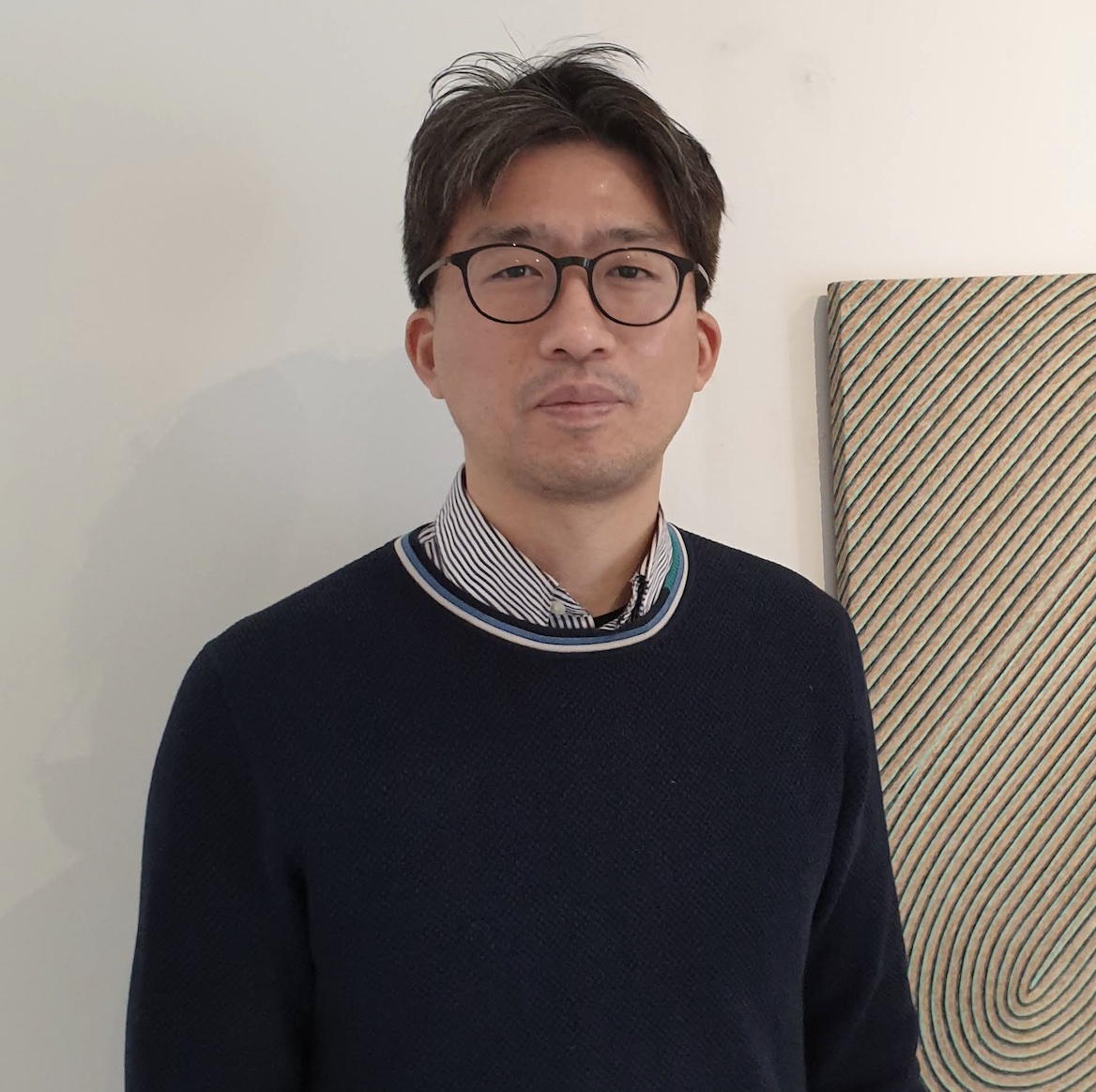
John F. Marko

This event consists of one colloquium and a four-lecture series presented by John F. Marko (Northwestern University).

The colloquium, entitled Biological Physics of DNA, Chromosomes and Nuclei, provides a broad overview of how concepts from polymer physics and statistical mechanics contribute to our understanding of DNA organization, chromosome dynamics, and nuclear mechanics in living cells.

The lectures are designed for students and researchers interested in biophysics, soft matter physics, and chromosome biology, and emphasize connections between theory, single-molecule experiments, and cellular-scale phenomena.

Host: Dr. Keng-Hui Lin (Institute of Physics, Academia Sinica)


Venue: 1F Auditorium, Institute of Physics, Academia Sinica

Schedule (tentative):

  • Wed, April 15, 2026
    Colloquium: Biological Physics of DNA, Chromosomes and Nuclei2:00–3:15 PM
  • Thu, April 16, 2026
    Lecture 1: DNA: Structure, Elasticity, and Protein Interactions — 10:30–11:45 AM
    Lecture 2: DNA Twisting and Supercoiling — 2:00–3:30 PM
  • Fri, April 17, 2026
    Lecture 3: DNA Topology and Its Regulation In Vivo10:00–11:15 AM
    Lecture 4: Mechanics of Chromosomes and Cell Nuclei — 2:00–3:30 PM
Registration
Biological Physics of DNA, Chromosomes and Nuclei Colloquium & Lecture Series
    • 14:00 15:15
      Colloquium: Biological Physics of DNA, Chromosomes and Nuclei

      I will present our current understanding of the role of polymer physics and statistical mechanics in illuminating chromosome dynamics in living cells, based on our understanding of DNA organization driven by enzymes studied in single-molecule nanomechanics experiments, as well as experiments done on living cells.

    • 10:30 11:45
      Lecture 1: DNA: Structure, Elasticity, and Protein Interactions

      DNA structure and biological role; DNA elastic deformation; worm-like-chain statistical mechanics; unzipping of DNA by force; protein–DNA interactions with a focus on chromosome-organizing proteins (HU, Fis, IHF, H-NS, HMG-box proteins; histones and nucleosomes).

    • 14:00 15:30
      Lecture 2: DNA Twisting and Supercoiling

      Torsional stiffness; biological origin and role of supercoiling; Gauss invariant; Lk = Wr + Tw; twistable worm-like-chain model; plectonemic supercoiling; torsional-stress-driven strand separation; magnetic tweezers experiments; DNA force–torque phase diagram; topoisomerases; GapR.

    • 10:00 11:15
      Lecture 3: DNA Topology and Its Regulation In Vivo

      Polymer entanglement; knotting and entanglement lengths; chromosome dynamics during the cell cycle; lengthwise compaction model; active loop extrusion model; SMC complexes (condensin, cohesin, SMC5/6, bacterial SMCs); experimental evidence supporting the loop extrusion model.

    • 14:00 15:30
      Lecture 4: Mechanics of Chromosomes and Cell Nuclei

      Micromanipulation experiments; mechanics of chromosomes; biochemical and genetic modification of chromosomes and what they teach us; subchromosomal mechanics; epigenetic modifications; mechanics of cell nuclei.