Workshop on Random Walks in Biological Physics with Focus on DNA and chromosome structure

Asia/Taipei
1F Auditorium (Institute of Physics, Academia Sinica)

1F Auditorium

Institute of Physics, Academia Sinica

Description
Speakers
Prof. John F. Marko
(Northwestern University)
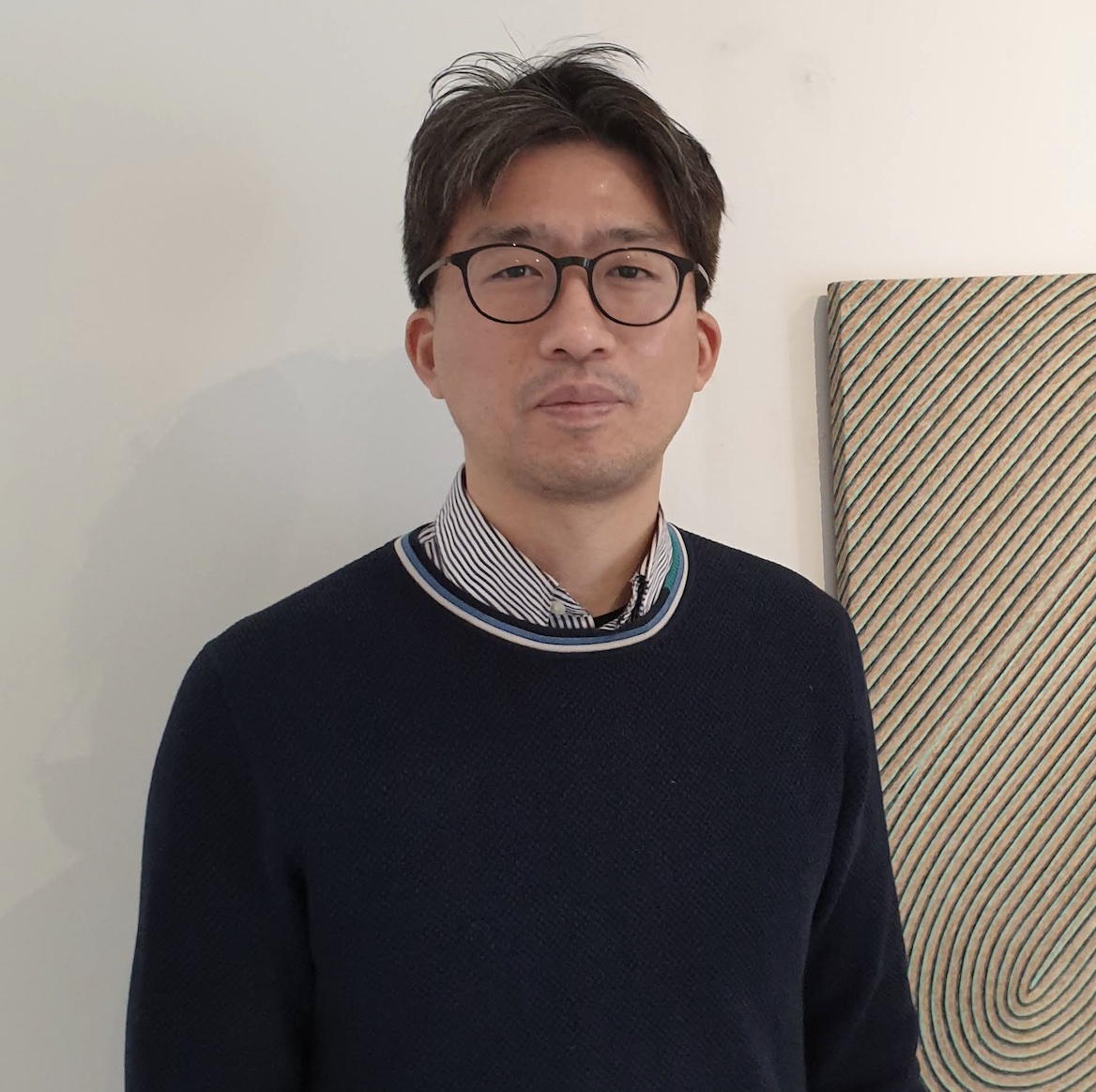
Organizers and Sponsors
• Institute of Physics, Academia Sinica
• National Science and Technology Council (NSTC)
• Center for Complex Systems, NCU
• Division of Physical Biology and Biological Physics, TPS

This workshop contains four lectures given by John F. Marko and two lectures by Jae-Hyung Jeon. John’s lectures are designed for students and researchers interested in biophysics, soft matter physics, and chromosome biology, emphasizing connections between theory, single-molecule experiments, and cellular-scale phenomena. Jae-Hyung Jeon’s lectures focus on theoretical frameworks for anomalous diffusion processes commonly observed in living systems.

Venue: 1F Auditorium, Institute of Physics, Academia Sinica

Schedule (tentative)

Wed, April 15, 2026
• 02:00–03:15 PM — Colloquium: Biological Physics of DNA, Chromosomes and Nuclei (John F. Marko)
Host: Keng-Hui Lin

Thu, April 16, 2026
• 10:30–11:45 AM — Lecture 1: DNA (John F. Marko)
Host: Keng-Hui Lin

• 01:30–03:00 PM — Lecture 2: DNA Twisting and Supercoiling (John F. Marko)
Host: Pik-Yin Lai

• 03:30–05:00 PM — Lecture 3: Introduction to Stochastic Theories for Anomalous Diffusion Processes in Living Systems (Jae-Hyung Jeon)
Host: Tetsuya Hiraiwa

Fri, April 17, 2026
• 10:00–11:15 AM — Lecture 4: DNA Topology and Its Regulation In Vivo (John F. Marko)
Host: Keng-Hui Lin

• 01:30–03:00 PM — Lecture 5: Mechanics of Chromosomes and Cell Nuclei (John F. Marko)
Host: Hsuan-Yi Chen

• 03:30–05:00 PM — Lecture 6: Introduction to Stochastic Theories for Anomalous Diffusion Processes in Living Systems (Jae-Hyung Jeon)
Host: Tetsuya Hiraiwa

Secretary, Ms. Vicky Chen
Registration
Workshop on Random Walks in Biological Physics with Focus on DNA and chromosome structure
    • 14:00 15:15
      Colloquium: Biological Physics of DNA, Chromosomes and Nuclei (Prof. John F. Marko)

      I will present our current understanding of the role of polymer physics and statistical mechanics in illuminating chromosome dynamics in living cells, based on our understanding of DNA organization driven by enzymes studied in single-molecule nanomechanics experiments, as well as experiments done on living cells.

      Convener: Prof. Keng-Hui Lin (Institute of Physics, Academia Sinica)
    • 10:30 11:45
      Lecture 1: DNA (Prof. John F. Marko)

      DNA structure and biological role; DNA elastic deformation; worm-like-chain stat mech; unzipping of DNA by force protein-DNA interactions (focus on structural chromosome-organizing proteins HU, Fis, IHF, H-NS, HMG-box proteins; histones and nucleosome).

      Convener: Prof. Keng-Hui Lin (Institute of Physics, Academia Sinica)
    • 13:30 15:00
      Lecture 2: DNA Twisting and Supercoiling (Prof. John F. Marko)

      Torsional stiffness; biological origin and role of supercoiling; Gauss invariant; Lk = Wr + Tw; TWLC model; plectonemic supercoiling; torsional-stress-driven strand separation; magnetic tweezers experiments; DNA force-torque "phase diagram"; topoisomerases; GapR.

    • 15:30 17:00
      Lecture 3: Introduction to Stochastic Theories for Anomalous Diffusion Processes in Living Systems (Prof. Jae-Hyung Jeon)

      Anomalous diffusion, referring to deviations from classical Brownian motion, is often observed in living cells where macromolecules move in crowded, heterogeneous, and often actively driven environments. This talk offers a pedagogical introduction to the physics of anomalous diffusion in biological systems, starting from the historical foundations of Brownian motion and Einstein–Langevin theory and progressing to modern experimental observations from single-particle tracking and super-resolution microscopy. We will discuss how intracellular transport exhibits subdiffusion, superdiffusion, non-Gaussian displacement statistics, and trajectory-to-trajectory variability, signaling the breakdown of classical diffusion paradigms. To explain these phenomena, several stochastic models will be introduced, including continuous-time random walks, fractional Brownian motion and fractional Langevin equations, diffusion on fractal or obstructed media, Lévy walks, and random diffusivity models. Emphasis will be placed on key physical concepts, such as the roles of memory, heterogeneity, and activity, the distinction between time- versus ensemble-averaged observables, and ergodicity breaking.

      Convener: Prof. Tetsuya Hiraiwa (Institute of Physics, Academia Sinica)
    • 10:00 11:15
      Lecture 4: DNA Topology and Its Regulation In Vivo (Prof. John F. Marko)

      Polymer entanglement; entanglement and knotting lengths; chromosome dynamics during cell cycle; lengthwise compaction model; active loop extrusion model; SMC complexes (condensin, cohesin, SMC5/6 bacterial SMCs); experiments supporting
      loop extrusion model.

      Convener: Prof. Keng-Hui Lin (Institute of Physics, Academia Sinica)
    • 13:30 15:00
      Lecture 5: Mechanics of Chromosomes and Cell Nuclei (Prof. John F. Marko)

      Micromanipulation experiments; mechanics of chromosomes; biochemical and genetic modification of chromosomes and what they teach us; subchromosomal mechanics; epigenetic modifications; mechanics of cell nuclei.

      Convener: Prof. Hsuan-Yi Chen (Department of Physics, National Central University)
    • 15:30 17:00
      Lecture 6: Introduction to Stochastic Theories for Anomalous Diffusion Processes in Living Systems (Prof. Jae-Hyung Jeon)

      Anomalous diffusion, referring to deviations from classical Brownian motion, is often observed in living cells where macromolecules move in crowded, heterogeneous, and often actively driven environments. This talk offers a pedagogical introduction to the physics of anomalous diffusion in biological systems, starting from the historical foundations of Brownian motion and Einstein–Langevin theory and progressing to modern experimental observations from single-particle tracking and super-resolution microscopy. We will discuss how intracellular transport exhibits subdiffusion, superdiffusion, non-Gaussian displacement statistics, and trajectory-to-trajectory variability, signaling the breakdown of classical diffusion paradigms. To explain these phenomena, several stochastic models will be introduced, including continuous-time random walks, fractional Brownian motion and fractional Langevin equations, diffusion on fractal or obstructed media, Lévy walks, and random diffusivity models. Emphasis will be placed on key physical concepts, such as the roles of memory, heterogeneity, and activity, the distinction between time- versus ensemble-averaged observables, and ergodicity breaking.

      Convener: Prof. Tetsuya Hiraiwa (Institute of Physics, Academia Sinica)